

The disparities of disaster journalism

Published Aug. 24, 2010, in J-Source
By Claude Adams
In November, 1985, the CBC sent me with a TV crew to the town of Armero in Colombia, scene of an horrific mudslide that buried the town and 20,000 of its inhabitants. In the remorseless media hierarchy of human events, Armero was a middle-of-the-show disaster. An aerial shot, some failed rescues, a few anguished interviews with survivors, a government statement, and a reporter’s on-the-scene wrap.
But then we found Omayra Sanchez. Omayra was a pretty, 13-year-old girl trapped up to her shoulders in the mud and debris. For 60 hours, with reporters all around her, she waited to be rescued. She gave interviews, prayed, cried. Her image went round the world—an icon of heartbreak and tragedy. All rescue efforts failed. Then she died, of gangrene and hypothermia. Over the years, reporters who were there would forget Armero, but they would remember Omayra.
She taught me my first, and most indelible lesson about journalism and disaster: the anecdotal human experience will always command our attention. Josef Stalin predated modern electronic newsgathering, but in a twisted way he got one thing right: A single death is a tragedy, a million deaths is a statistic.
For better or worse, we are all transfixed by the singularity, Omayra living and breathing and in close-up. Whether it’s a baby pulled out of the rubble of a Haitian earthquake, or a tourist who survived a tsunami, the “human interest” anecdote will inevitably trump the Big Picture story. It’s not good or bad, it’s just human psychology, and it’s also part of the complex algorithm of media disaster coverage.
This came to mind while evaluating the very uneven North American media coverage of the Pakistan flooding. Considering the scale of the catastrophe—as many as 17 million homeless, and perhaps many more facing a food crisis—why is the flooding getting so much less coverage than the Haitian earthquake?
After all, the scope of this act of God is heart-stopping. In a recent report, the Toronto Star’s Rick Westhead quoted an aid official’s description: “It’s like Ontario disappearing under water, and dragging half of Manitoba with it.” On the basis of geography alone, it should be getting a lot more attention.
But it clearly isn’t. As Al Jazeera English noted in a recent report, in the week after it happened, the Haiti quake filled 41% of the “news hole” in US newscasts. The Pakistan flood, meanwhile, attracted only 3%. I would guess that you would find roughly the same disparity in Canadian newscasts.
Many reasons are being advanced for this gross imbalance in coverage. Pakistan is far away and far less accessible. Fewer than 2000 people have died, while the death toll in Haiti approached 300,000. We’re in the dog days of summer, when nobody is watching television. Our viewers and readers don’t travel there, and it has a much smaller diaspora. Celebrities haven’t taken up the cause. We’ve become “tragedy fatigued” after Haiti, the oil spill in the Gulf of Mexico, and the continuing calamity in Afghanistan.
We’re told that the narrative of Haiti that we carry in our minds—misery compounded by poverty, a lost ecology and bad weather—is perfectly consistent with the devastation wrought by the January earthquake. It’s an easy story to tell. Our narrative of Pakistan, however, is colored by a complex storyline of insurgency, regional conflict, corruption, the Taliban. Some commentators talk about an “image deficit”—a politically-tinged perception of Pakistan that influences both the flow of aid, and the allocation of resources by media organizations to cover the story.
Maybe we’ve become jaded by the optics of mayhem. In a 2005 assessment of how the media cover catastrophes, the International Red Cross noted that “sudden dramatic disasters like volcanoes or tsunamis are intensely newsworthy whereas long drawn-out crises (difficult to describe, let alone film) are not.” An earthquake’s damage is picturesque, in the strict sense of the word; a flood hides its havoc. It’s just a lot of water.
Or it may be something as simple as money. In mid-1990, while I was working for the CBC in London, northern Iran was struck by a massive earthquake that claimed nearly 40,000 lives. I argued that we should be sending a crew and edit suite to Tehran immediately. I was over-ruled. It had nothing to do with body counts or disaster algorithms.The National’s newsgathering budget simply couldn’t handle it.
How do we rationalize our inexcusable indifference to the ongoing war in the Congo, which in its body count alone—five million and counting, along with rape and the dispossession of millions more—far surpasses any other human outrage since the Holocaust? The answer: too hazardous to cover, too many layers, covering too vast an area, too complicated. (And not as eye-catchingly “newsworthy” as the plight of the mountain gorillas on the Congo-Rwanda border.)
But these, in the end, are all alibis. And failures of imagination. There’s a Haitian Creole saying: “Tou moun et moun.” All people are people. And every human story, told in close-up and in detail and with compassion, has the capacity to touch us and teach us, whether in Port-au-Prince, or a flooded Pakistani village, or a hill town in Colombia. Their stories help us understand how the world works, and doesn’t work. Plus it’s great television. In 1984, the CBC’s Brian Stewart traveled to a part of the globe few Canadians knew or cared about—the wilds of Ethiopia—and came back with famine stories that captured the world’s attention.
Newsroom culture has changed dramatically in 25 years. Journalists are no less compassionate, but they are tied to a tight bottom line. Often, decisions of what to cover, and not to cover, are linked to the Eyeball Imperative—how many viewers will this story attract? How can we deliver a more cost-effective newscast? If we accept that Eyewitness News and crime/celebrity/ground-zero mosque stories draw bigger numbers than serious international journalism, how does a flood in Pakistan fit into the new business model?
As the news assignment desk becomes more and more corporatized, the Omayra Sanchez stories in the distant corners of the world will go unattended, unwritten and unfilmed. That would be a loss for journalism, and for all of us.
Tag: claude adams
Pakistan in the disaster shadow
Aug 27, 2010 by David Milliken under Hot Topics, Insights
A few weeks ago we posted a Hot Topic button to our websites when it became evident that we were receiving news releases concerning the flood disaster in Pakistan. Initially, news releases from World Vision and the Canadian Red Cross moved over the wire. These were followed by various organizations announcing substantial donations to aid the stricken country.
However, the volume of content came nowhere near the deluge of news releases that crossed CNW in the aftermath of the earthquake in Haiti. The floods have left an estimated 17 million people homeless in Pakistan, and one media report described the devastation “… like Ontario disappearing under water, and dragging half of Manitoba with it.” Canadians were quick to respond to Haiti – as evidenced by the sheer volume of releases on CNW – but the nightmare in Pakistan seems second rate.
Why? Claude Adams, a freelance journalists, documentary filmmaker and broadcast journalism instructor, offers a balanced and thoughtful insight into why Pakistan isn’t getting the news coverage. His essay, posted on J-Source, can be accessed here: http://www.journalismproject.ca/english_new/detail.php?id=5527.
ShareThis | 0 comments
Tags: claude adams, crisis, flood, Hot Topics, j-source, journalism, News, pakistan
The Limits of Compassion
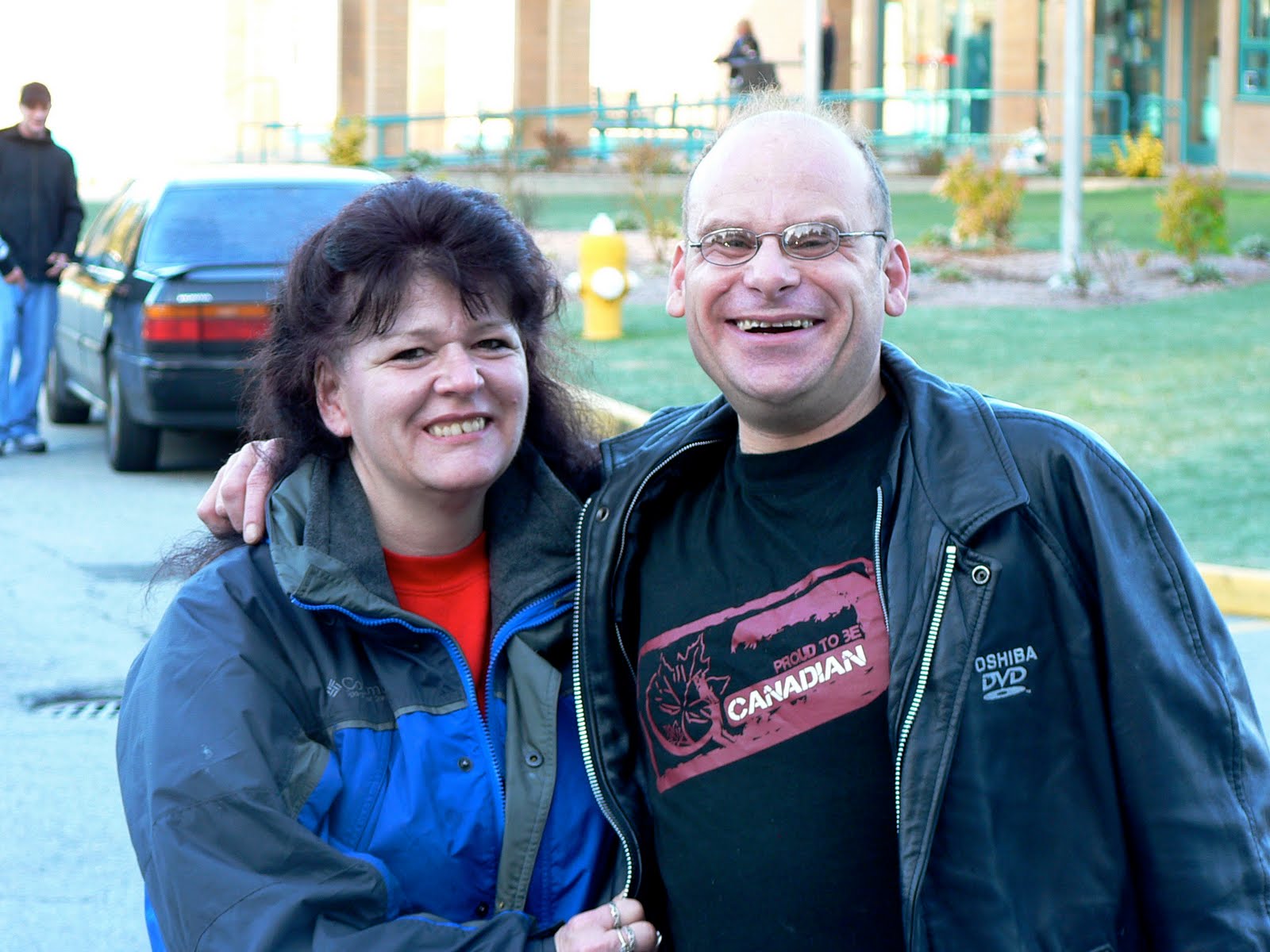
Vancouver Province, July 20, 2010
By Claude Adams
Twice in less than a year, Steve Fonyo has learned a harsh lesson about the limits of Canadian compassion.
The first time came back in December when he heard, while in jail, that he’d been summarily stripped of his Order of Canada—awarded 25 years ago for his epic run across Canada for cancer research.
The second time came last week, when a group in Victoria, BC, withdrew its support for Fonyo’s planned wedding next month, on Fonyo Beach, near Mile Zero, where he ended his run.
The reason: His fiancé, Lisa Greenwood, was in jail for shoplifting, and Fonyo didn’t tell them about it. That bit of dishonesty, along with rumors about other alleged misbehavior, was enough to provoke the Victoria group to yank the welcome mat, along with the flowers, limousine, wedding cake, free hotel accommodation, air tickets and other donations that were pledged.
“We are all God’s children,” said the organizer of the disillusioned Victoria group, John Vickers, but, alas, some “children” are more deserving than others. Call it kindness by contract: I will give you something, if you repay me with displays of virtue. It’s charity that often becomes paternalistic and judgmental--leading to a form of transactional redemption for both donor and recipient.
But it’s not the real thing. Compassion comes without conditions. “Compassion,” said the 19th century American clergyman Henry Ward Beecher, “will cure more sins than condemnation.”
Steve Fonyo’s life is full of sin, and condemnation. I first met Steve in jail last January. He was doing time in a Maple Ridge cell for the latest in a series of mostly petty offenses. His life was a train wreck: no job, no money, few friends and no prospects, and a growing rap sheet.
I picked Steve up on his release date in early February. His clothes were unwashed, and his artificial leg wasn’t functioning. The two-month jail term left him shaken. He said he’d been attacked and almost killed by a fellow inmate. He hobbled into the arms of Lisa, who was also there to greet him, and they hugged for minutes.
On the drive home, he talked about their impending wedding. Steve told me he’d never loved anybody the way he loves Lisa. But it's a rocky relationship. When they arrived at their rented home in Surrey, Steve discovered she’d sold some of his possessions to feed her cocaine habit. He was furious, and he asked me to leave so he could have it out with her. The next few weeks were an emotional whirlwind: they would fight, and make up, and fight again. She burned a manuscript that she had written about their life together. Before she destroyed it, she allowed me to read it. It was a touching document, a love story of two people joined in a communion of addiction and despair.
It was at about this time when John Vickers contacted Steve. Vickers, the director of the Victoria Truth Centre, said he’d like to help Fonyo with his wedding plans. An accomplished fundraiser, he quickly pulled together a network of contributors. “It’s up to us,” Vickers told me in an interview on Fonyo Beach, “to ensure that this (achievement) has a proper footnote in Canadian history.”
Fonyo mused that the wedding would excite national attention, “just like Prince Charles and Lady Diana.” Vickers said he might have to hire security guards. They were like two excited kids, building sandcastles on a beach.
Fonyo lied about Lisa being in jail, because he didn’t want any blemishes on the evolving fairy tale. But Vickers found out anyway. A person close to Fonyo told Vickers that Lisa was in jail, and speculated that she might not even be released before the wedding. And there were other things: rumors about drugs and stolen goods and shoplifting at the Fonyo home. In emails to me, Vickers worried that “many innocent people (were) being truly victimized” by Fonyo’s activities.
I asked him if he had any hard evidence. He didn’t. Could he name somebody who had been victimized? He couldn’t. He acknowledged that his assumptions were “unsubstantiated” and that it may have been a “sorrowful failing” on his part to jump to conclusions. Vickers issued a news release, saying the wedding was off due to “complications.” All the other Victoria donors melted away, all except 88-year-widow Norma Fitzsimmons who told me she would still donate flowers, and solicit other donations, because “I don’t believe in hitting someone who’s already down.”
Fonyo never got to answer the allegations. And, as with the Order of Canada revocation, he never found out who his accusers were.
Steve Fonyo raised an estimated $13 million in the fight against cancer. It was the selfless and reckless act of a teenager driven by a crazy idea that succeeded, against all odds. He never asked for anything in return.
Fonyo is a hard case: rough, often uncouth, prone to anger, insensitive to others, opportunistic, not always truthful. He’s an addict on the road to recovery (he says), and likely suffers from Attention Deficit Disorder. In short, he’s not an easy man to warm up to. “I am what I am,” he says defiantly.
But for all that, Steve Fonyo is what we made him. He’s a product of our culture, a culture that confers celebrity, and then takes it away, and then passes judgment. We created the hierarchy of values that he tried, and failed, to live up to.
In a way, Steve Fonyo holds up a mirror in which we see the reflection of all the things we dislike and disown in ourselves. And that reflection presents us with the challenge to learn what a true community of compassion might look like.
“There’s a whole swath of Canadians across the country who want to see (Steve) get on a better path,” said Vickers. Then he withdrew his offer of help, even though his Truth Centre offers healing for those “in situations less than perfect.”
A wedding won’t save Steve Fonyo. That’s just one of the fantasies he wove, with our complicity. But he doesn’t need or want our approval. What he needs is some trust and compassion--the same kind of raw unquestioning altruism he showed when he started his run, for us, in a Newfoundland snowstorm 26 years ago.
A SPORTSCASTER REACTS
August 6, 2010
I read your article about Steve Fonyo. I appreciate your thoughts, and the article was very well written, but I do not believe Steve Fonyo is worthy of your efforts.
Steve Fonyo ran across Canada to promote himself. To show others he was just as good as Terry Fox, and was able to do anything Terry could do… only better. Steve is not a person who does things without benefit to himself. He is a thief, an addict and an emotional cripple. He has no idea how to run his life, and is… simply put… not a very nice person.
When Steve decided he was going to run across Canada, he walked into the news room at CJIB Radio in Vernon BC, and promptly told News Director Glen Morrison “ I am Steve Fonyo, I am going to do what Terry Fox could not do… what are you going to do for me?”. I know this, because I was there when it happened. I was the Sports Director in the same news room. His attitude was awful, so we sent him packing without a sponsorship. CKAL Radio took the sponsorship and regretted doing so.
For the better part of the next year, we heard and witnessed all kinds of stories about the things Steve did during his Canada wide run. Walking out of restaurants without paying the bill… swearing at people who did not donate…. And being charged with theft in Salmon Arm, for walking out of a Shoppers Drug Mart store with a basket full of personal items.
Even the Canadian Cancer Society threatened to withdraw their approval of the run.
Steve Fonyo does not deserve our compassion.
Make some phone calls to the people who were involved with “the run”. Find out about all the Dirty Little Secrets…!!!
The life and times of Steve Fonyo, would be an interesting read if ALL the details were ever released. He is a Con, and you have been conned (sp). He is no better than a common thief, liar and addict. The only difference is that he is Almost Famous!
He is addicted to the spotlight, and will do anything to keep himself in it.
Sorry, but there are a lot of real people in this world that need our compassion. Steve Fonyo is not one of them.
Craig Jeffers
250-412-9705
August 7
Craig:
Thanks for your note. I wasn't aware of some of the anecdotal stuff you relate about Steve's past.
I view this at two levels. As a journalist, I too look at the accumulation of awful behavior, bad choices, and outright criminality, and am tempted to write him off as a reprobate.
But there's another way to view this. Steve is ill. He's almost certainly ADD (diagnosed in his 20s, and never treated) and he's an addict. He desperately needs therapy and psychological help. I've told him this, and others have too, but it's classic ADD behavior to disregard the best advice.
In a way, the more trouble he causes, the more compassion he is in need of. I'm not a bleeding-heart liberal, but I can see what's in front of me. His life is a cry for help. If we turn away now, he falls deeper down the rabbit hole.
Condemnation is the easiest thing in the world. "Fuck him"--the essence of a lot of the hate mail his story has generated-- slides off the tongue with no effort at all. Caring enough to push him in the direction of help is a little harder. Somebody asked me yesterday "How many times can he fall off his pedestal, and expect us to put him back?" My reply is that WE put him up on the pedestal, possibly against his will, and he never really felt at ease at that height. So let's not try to "put him back"--let's just try to help him find his angle of repose as if he were a brother of a child. That's hard work, and it may be disappointing and even heart-breaking.
But I think it's worth it. Even if he hadn't done something extraordinary for us as a teenager.
Claude Adams
Claude.
I appreciate your reply.
I do not disagree with most of the things you say. But I have had almost 25 years experience, both directly and indirectly with this man, and I feel you have lost sight of the fact that this is not a very nice person.
I respect you for your courage, but suspect you are being a little naïve. This is not a man that will change, but will allow you to help him until he has exhausted every ounce of your patience, energy and time. He’ll take from you whatever he can get, and leave you wondering why you ever thought you could help in the first place.
There have been a lot of well meaning people trying to help him over the years. The “wedding planner” in Victoria is the perfect example. The wedding of a lifetime for Steve and his fiancé… only to be spoiled by the fact that she was in jail and he steals gas!
Maybe before you get more involved, you should investigate a little more. Drive to his hometown of Vernon BC. Interview friends and relatives. Talk to Glenn Morrison, Doug Blackie and Lee Powell about covering the “run”. See why the people in his own home town are embarrassed, and not willing to help any more. He gives a whole new meaning to the term “heart-breaker”.
I wouldn’t call you a “Bleeding Heart”, only a good guy, trying to understand why this guy is so bad. I enjoyed your article. It was fair. But, I would hate to see another person get hurt and be taken advantage of.
**Sorry for the bad grammar…. I was a Sportscaster… not a news guy,.,…. Hahahaha
Craig
AUGUST 7
Craig:
"This is not a man that will change."
Think about that statement a little, and you will see just how wrong-headed it is. Was Fonyo born a lying, cheating, opportunistic heartbreaker? Of course not (unless you believe in the "bad seed" theory). He was "changed" into that lifestyle by circumstances, most of which started young, many of which we are not aware of, and some of which we, his audience, may even have contributed to.
Read some elementary psychology, about how people learn to survive in the world, about how they react to classic punishment and lack of mentoring.
You call me naive; I prefer to believe that I think a little more deeply and critically, and humanely . . . We live in a community of interdependencies: some of us in this community benefit more than others from the compassion that drives the community. Steve fell through the cracks: I'm sure your list of eyewitnesses have a lot of rich anecdotes about how he is "not a very nice person." I don't challenge that assessment: my question is, how did it happen, and what do we do about it?
Was his run across Canada a giant "con" by a wet-behind-the-ears teenager? I was watching in the 80s when he did it, I've also been around the world a few times in my life since then, and met a lot of saints and sinners, and I believe Steve is neither. He's just a thoroughly fucked up kid who swears a lot, cries easily, has terrible relationship problems, and employs some unfortunate survival mechanisms. He gets caught, but as an ADD-stricken guy, compounded by addiction, he doesn't take responsibility, or feel guilt. (Read about this condition. It's very interesting.)
Too many of us, confronted by the Fonyo's of the world, react, as sportscasters are trained to do, with their gut. That makes for good "gutsy" journalism, all black and white and headlining-grabbing and judgmental--a 30-second analysis. But it doesn't go to the heart and the head. And I think that's where you should do to understand Fonyo, and why our smug "gut" reactions don't serve anybody or anything (except maybe the little Stephen Harper that exists in all of us.)
regards
Claude
From Terry Delisle, August 7
Hi..
I just finished reading your rationalism,
on Fonyo`s behavior.
You have some good points.
I am a senior who was planning to attend his wedding
give a nice sum toward starting their new life.
Most all canadians are forgiving ... let the past stay
where it belongs.
But... we are dealing with the present now..that is
not looking any rosier than past misbehavior.
What kind of message then would we send
to the teens these days " rewarding " lawless living
regardless ?
As a parent of four decent law abiding, hard working adult children
I never believed in " unconditional love "
Due to dire circumstances I had to fill in both parent`s role
all by myself, in their formative years.
I was very firm, but fair and loving at the same time.
They got hugs and I love you`s every day.
With one of them I had to use " tough love " when
she did`nt toe the line, keep the rules ( bad outside influences ),
she had to leave our home
and live somewhere else, for 2 years..
Believe me it was a lesson to the 3 younger ones
they never gave me a speck of trouble seeing that.
The troublesome one in her teens got married early
have a better than average marriage
working at a responsible job in the bank for many years
Now at age 52
a happy grandmother and considers me her " best friend "
who helped keeping her on the straight and narrow.
at a time of her crisis.
I think we all feel compassion for Fonyo deep down
and in the long run our prayers will help more, than handouts.
We know Steve and Lisa are incapable of managing no matter
how much we would give.
First some serious, prolonged counselling ( since their parents did`nt do the job )
then help them get on their feet.
respectfully yours : Terry
terry-rose@shaw.ca
Terry:
Here's a thought: Maybe real compassion comes only after the point when you really don't want to give it any more. Think of the drowning man who fights off your efforts to save him. Do you stop trying?
The wedding is a smokescreen. Steve and Lisa embraced the idea for a lot of complicated reasons, but it's a dumb idea. An idea that we, as a society, get very excited about for reasons I'll never understand. A public wedding for them would be a mistake but they don't know it. In a strange way, WE are imposing it on them. We're all hung up on rituals
As you say in your last line, they need counseling. Now. The truly compassionate Canadians will dampen the wedding bells, and focus on getting them both some help
Claude
Native Compensation: A poisoned chalice?

Three years after this article appeared in the June 2010 issue of Reader's Digest Canada, Dale Myra, on the left, was found frozen to death in the Whitehorse night. That's Phillip Gatensby on the right, his friend and counsellor. "I'm sure he is in a much better place now and suffers no more," Phillip told me. " PS, he loved the article."
By Claude Adams
The adjudicator spoke softly, but the questions struck Dale Myra at his core. Myra and his lawyer had prepared months for this session, rehearsing the words, going over his testimony. A Cree native in his early 40s, Myra had never before spoken about being raped in his Yukon residential school, but sitting in a lawyer’s office in Whitehorse, he was being pressed for details. He became nervous and tongue-tied. At times, he broke down. For support, he looked across the room to his friend and counselor, Phillip Gatensby.
By the end of the afternoon, he had told the adjudicator everything, reliving his abuse, episode by painful episode. All that remained was the judgment and the payment. Or so he thought.
A few weeks later, the Canadian government apologized to Myra. This was followed by $265,000, given in two installments. Suddenly, he was rich. The experience, however, had left him gutted. It’s a terrible irony: the money—and what he had to do to get it—made Myra’s life worse.
Myra’s story is not unusual. While there are no reliable statistics, thousands of men and women who were compensated for their mistreatment in the residential schools never received the psychological and emotional help they needed. The money was meant to start their healing, but for many it became a poisoned chalice. By accepting the cash, survivors waived the right to initiate lawsuits against either the government or the churches, (although they are still able to initiate proceeding for more compensation claims based on cases of individual abuse.) And when that money was gone, they had nothing, only their pain and unresolved trauma.
This cycle of pain, payout and more pain is the latest chapter in the sorry history of Canada’s residential schools, which became compulsory for Indian, Metis and Roman Catholic Inuit children in 1920. Separated from their parents, children lost their language, their culture and, in many cases, their sexual innocence. The last of the schools closed in 1996, and by then lawsuits, charging sexual and other abuse, were already in the courts. The federal government, the churches and native groups eventually agreed that survivors should be able to bypass the courts in their bid for compensation. As a result, direct payments and closed hearings were instituted in 2006.
So far, the federal government has paid out $2.05 billion to school survivors; the churches (Presbyterian, Anglican, United and Catholic) have contributed about $100 million of that amount. The money was distributed in two blocks. The lion’s share, called the Common Experience Payment, went to nearly 100,000 former students who simply had to prove they attended one of 139 residential schools. The rest went to compensate survivors who could show they suffered sexual abuse.
Tony Martens, a social worker in Surrey, B.C., whose agency has worked with hundreds of native families, says residential school survivors are especially vulnerable when telling their stories because they’re forced to drop their defenses after decades of shamed silence. “Those defense mechanisms—drugs, alcohol, alienation, denial—probably saved their lives, despite how unhealthy they may be,” Marten says. “When we eliminate those things, in short periods of therapy, we can create somebody who’s likely to become suicidal.” Indeed, Myra tried to kill himself after he revealed the trauma of his school years. “All the things you want to forget in your life, they come back,” he says. “It’s a dirty secret.”
Myra says his lawyer, Laura Cabott, told him where he might get some advice about trauma and managing money, but she didn’t press him on it. He had other ideas anyway. “I can handle it,” he told her. “And if I need to cry, I can go up into the mountains by myself.” Plus, he had his friend Gatensby, whom he could call when things got really bad.
But this friendship, and the mountains, weren’t enough. Over the next several years, Myra burned through his compensation money like a man possessed. He gave $60,000 to the woman raising his son, and spent the rest on epic binges with friends. He became a brawler, spent time in jail, and traveled the province on a drunken odyssey. “Stayed at the Day’s Inn in Vancouver for a while, very high class, more than a hundred dollars a night.” he says. “I would call room service, tell ‘em I need another case of beer and they went down to the liquor store and got it for me. Met some of my cousins, and got them all wasted.” That party lasted two weeks. Once he hit bottom, he tried to slash his wrists.
Today, Myra lives on the streets of Whitehorse with “two cents in my back pocket.” His spiral downwards is mostly a blur. He’s a trained heavy equipment operator, but he’s too damaged by addiction to work. His hands shake when he talks.
Yet lawyer Laura Cabott argues that the media exaggerate stories with bad endings. “I’ve been doing this for 13 years,” she says, “and I’ve had hundreds of clients and I’ve found that generally people do wise things with their money.”
In the Yukon town of Carcross, the sudden arrival of payout money two years ago caused a spike in illegal drug use. Dealers from B.C.’s Lower Mainland swarmed into the area and found ready customers among the newly enriched natives. “There was an enormous influx of crack cocaine,” says criminal justice support worker Mark Stevens. When the money ran out, so did the traffickers. The local addicts went back to what Stevens calls “the drug of choice”—alcohol. Dr. Patricia Bacon, who heads a harm reduction program in Whitehorse, said that when the “gravy train” of government money ran out, dozens of cocaine users had overdosed. Some of them died.
Willard Martin, a First Nations chief in Greenville, B.C., has noticed another phenomenon. “The saddest thing is when those who receive compensation relocate to urban areas where they spend their money and become homeless.” Martin said a popular destination is Vancouver’s Downtown Eastside, Canada’s most notorious centre of homelessness and drug addiction.
To be sure, many compensation stories are positive. Some recipients paid off debt, bought new homes or fixed up old ones. Aboriginal culture is a sharing culture, and a lot of the payments were distributed among family and friends. Other recipients, like Whitehorse’s Norman Drynock, used their money for their child’s education. “I will watch my daughter graduate. She’s the first one in our family to go from high school to college.”
In Edmonton, survivor Leonard Martial, a small, soft-spoken alcoholic, used his $13,000 compensation to buy clothes, a laptop, food and to help his brother with his bills. For a while he lived in a tent, but the money gave him a financial cushion, and social workers helped him find a small apartment. He also got help to recover from his addiction.
Martial died last February but his resilience and generosity made a strong impression on other residential school survivors. Karen Bruno, manager of Aboriginal services at the Boyle Street Community Services in Edmonton, says Martial was a mentor and icon to the survivors. "Five hundred people attended his funeral. He had a better life in his year and a half with us than he had in his life before." she adds--a tribute to the positive effects of compensation when it is accompanied by long-term counseling and social assistance. But Leonard lived in a big city, where there are numerous social safety nets to help people who seek it. That’s not the case in many of Canada’s outlying areas.
Even if Dale Myra had taken his lawyers advice and had asked for help, he might well have not had timely access to the help he needed in Whitehorse. A local native support group centre says there’s an eight- to 12-month waiting list for professional help in that city. In British Columbia, Dr. Charles Brasfield, a Vancouver-based outreach psychiatrist and psychologist who has worked in native communities for 25 years, says there are perhaps seven or eight qualified trauma counselors - psychiatrists and psychologists – to serve all of British Columbia. As a result, in that province alone, the thousands of residential school survivors, especially in distant rural areas, never get the help they need.
Mike Cachagee of Sault Ste. Marie, Ontario, executive director of the National Residential School Survivors, is deeply critical of how Canada’s churches and government are dealing with school survivors. “It’s like Pontius Pilate: We compensated them, we apologized, now get them the hell out of here.” Large payments of cash, without effective community-based healing to go with it, Cachagee says, is creating a “culture of substance abuse fueled by money; it’s like throwing gasoline on a fire.” Dr. Brasfield adds: “You don’t fix rape with a dollar bill.” (The NRSS lost its government funding earlier this year. “Basically, they cut us off,” said Cachagee, who claims it is because he is “so vociferous.”)
Even the lawyers working on behalf of survivors say that the money by itself has little therapeutic value. “We give them money because there’s really nothing else to give them,” says Regina lawyer Tony Merchant, whose law firm has represented thousands of First Nations litigants. But Merchant said it would be “paternalistic” to tell the recipients how to spend or invest their money.
Survivors like Willie Blackwater of Chilliwack, B.C., say Ottawa needs to stop looking for quick results. “It took generations to destroy us,” he says, “and they want us to heal in five years or less.” Seriously traumatized sex-abuse victims, says Martens, need months and even years of therapy before real healing starts
Residential school survivors suffered a further blow in March when Ottawa said it would cease funding an organization specifically established to target the trauma of residential schools: the Aboriginal Healing Foundation. Set up in 1998, the AHF supported 134 innovative community-based programs, some of which incorporated traditional healing activities.
Now, says AHF president Georges Erasmus, most will disappear. “In many areas, including the already under-serviced regions of the North, one-of-a-kind programs developed over years will be gone,” He says AHF was “the best hope we have for a better future.”
While cutting off the AHL in its 2010 budget, the government did set aside a further $199 million for what it called “higher than expected funding needs” for residential schools survivors. Health Canada says it is committed to making sure all former students and their families are able to get “effective and culturally safe mental health and emotional support.” To that end, it offers 500 “service providers”—native elders and healers, community-based mental health workers, psychiatrists and psychologists.
Some First Nations communities, like Alkali Lake in B.C. and Hollow Water in Manitoba, have their own unique native-run programs to deal with the legacy of residential schools. But even these programs are few and far between. And many compensated former students end up worse off in their communities.
One such example is 53 year-old Ben Pratt. Born in Lestock, Saskatchewan, he spent his adolescence in the Gordon Residential School, where he says he was raped. Thirty years later, he told his story and he was given $46,000 in compensation. Pratt was ostracized, he says, by people in his community who accused him of accepting “arse money.” A born-again Christian, his marriage broke up and he turned to alcohol. Pratt ended up without a family, without friends, and addicted. The money was gone within a year. He says that if he had things to do over again, he would “never ever have come forward” with his story about childhood abuse.
If the government money is such a curse, why do survivors continue to apply for it? Phillip Gatensby says the answer is simple: Poverty. Many aboriginal Canadians are so poor the promise of a large amount of money is irresistible. Also, many believe that if they finally break the silence of their abuse, they may also be released from its deep and lingering pain. Unhappily, Gatensby says, both these “releases” are often not achievable because so many of the survivors don’t have the appropriate psychological expertise available, nor a strong community to nurture and sustain them.
Critics of the payout program say this is where the federal government and Canada’s aboriginal leaders need to focus their attention—on programs that restore the “caring functional communities” that can help people like Myra rebuild a life, programs that promote sobriety and strong families, and programs that give jobs and dignity back to people like Pratt.
When asked by Reader’s Digest about the shortcomings of the native compensation payments, Margo Geduld, a senior communications advisor with Indian and Northern Affairs Canada, would say only that the federal government “realizes that the journey to healing is difficult for some former students.” “And that,” she added, “is why we continue to work with partners to ensure former students have access to culturally appropriate health support.”
Native leaders say healing is essential not only for the survivors of the residential schools but for the next generation of aboriginal Canadians. “If Canada fails to take up these opportunities in good faith,” says AHF president Georges Erasmus,” the youth will inherit the legacy of this failure, just as surely as if they had been in the residential schools themselves.”
For Dale Myra and those like him, though, it’s still all talk. As he walks out into the sub-zero Whitehorse night, Myra’s looking for his familiar support group: his street friends, nicknamed Timbits, Razzle and Rockin’ Robin. One of them will have a bottle of wine. Later, a friendly volunteer will be holding Bed #4 for him at the local Salvation Army shelter. Until something better comes along, this is Myra’s only community of compassion.
Sidebar
On a cold February day in Winnipeg last year, a grey-haired man shuffled into the Siloam Mission homeless. He introduced himself to staff as William Woodford, and handed over an envelope. Inside was a bank draft for $40,000.
Woodford, an aboriginal man in his mid-80s who had spent his childhood at the Elkhorn Indian Residential School, came back a few days later with an additional $10,000. He said he wanted to share his government settlement money with people needier than him.
Shelter staff said the money would be used for emergency beds and meals. Most of the people who use their services are aboriginals themselves, and many are school survivors like Woodford.
There are other examples of altruism among First Nations recipients of apology money. In Whitehorse, a group of 11 survivors from the Yukon and Northern B.C. communities pooled 10% of their compensation money to help launch a local organization called CAIRS, that provides therapy for survivors, along with woodworking, metalworking and other handicraft programs. The 11, who call themselves The Trailblazers, wish to remain anonymous.
And there are other compensation stories with more happy endings. Some recipients paid off debt, bought new homes or fixed up old ones. Aboriginal culture is a sharing culture, and a lot of the payments were distributed among family and friends. Other recipients, like Whitehorse’s Norman Drynock, used their money for their child’s education. “I will watch my daughter graduate. She’s the first one in our family to go from high school to college.”
\
Subscribe to:
Posts (Atom)